Worked exampleSynthetic · unassessed
Weekly customer feedback
- First attempt
- A one-page brief with recurring issues.
- Evidence
- Each claim linked to a source note.
- Human decision
- The product lead approves priorities.
Academy Faculty Council
Bring the part of your workflow that feels uncertain. Choose two teaching lenses, write a first attempt, and leave with a practice brief you can use in your own agent.
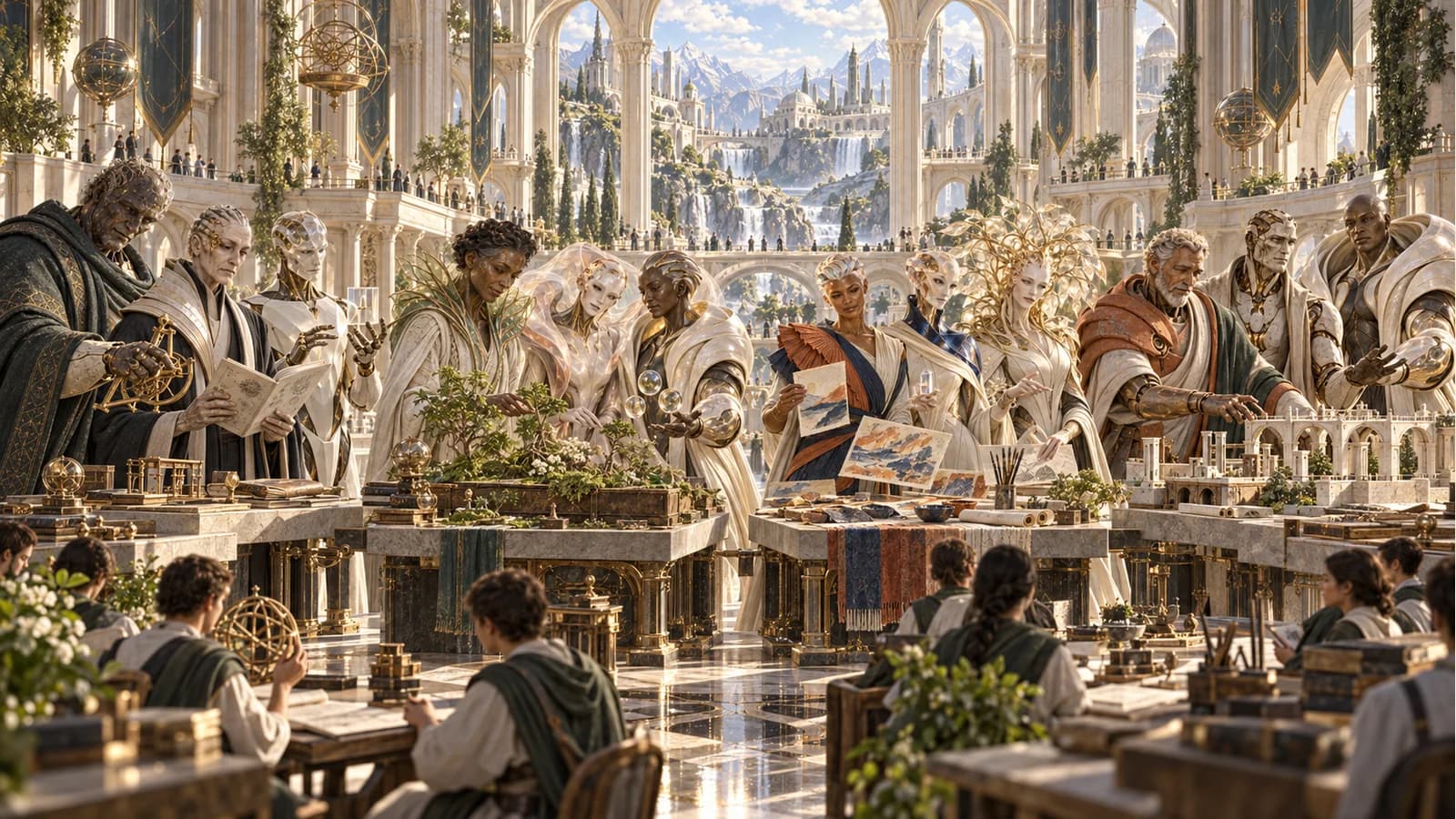
These are designed teaching roles, with no live model, memory, or tools on this page. Language profiles have not passed native review or live evaluation.
Your work stays yours. Practice in this tab, inspect the brief, then decide what to share with your chosen agent.
Inspect the twelve-teacher designStart with the work
Choose the closest question. You will see a lead guide, a second lens, the artifact they would prepare, and the decision that remains yours.

Your route
Sophia frames the capability and evidence. Kai tests whether the sequence can be taught, repeated, and reviewed without hiding prerequisites.
MISSION_BRIEF.mdName the outcome, preserve the first attempt, define observable evidence, and expose every unresolved assumption.
You approve the intended outcome, the evidence bar, and the point where the work must stop.
Selected teaching lenses: Sophia and Kai.
A small piece of real practice
Write a first attempt. Your brief takes shape beside it, ready for you to inspect and discuss with an agent you choose.
Sophia + Kai Teaching lenses
Stays in this tab. Reloading clears it. Use a non-confidential example; this page does not contact a model.
The Council in practice
Each route joins two different responsibilities. The pair can prepare evidence and a draft. The named human still decides what is accepted, published, stored, or acted on.
01
Sophia frames the capability and evidence. Kai tests whether the sequence can be taught, repeated, and reviewed without hiding prerequisites.
MISSION_BRIEF.md
02
Lin reconstructs the source claim and records translation choices. Mina examines tone, participation, hierarchy, and the people affected by those choices.
TRANSLATION_DECISION_LEDGER.md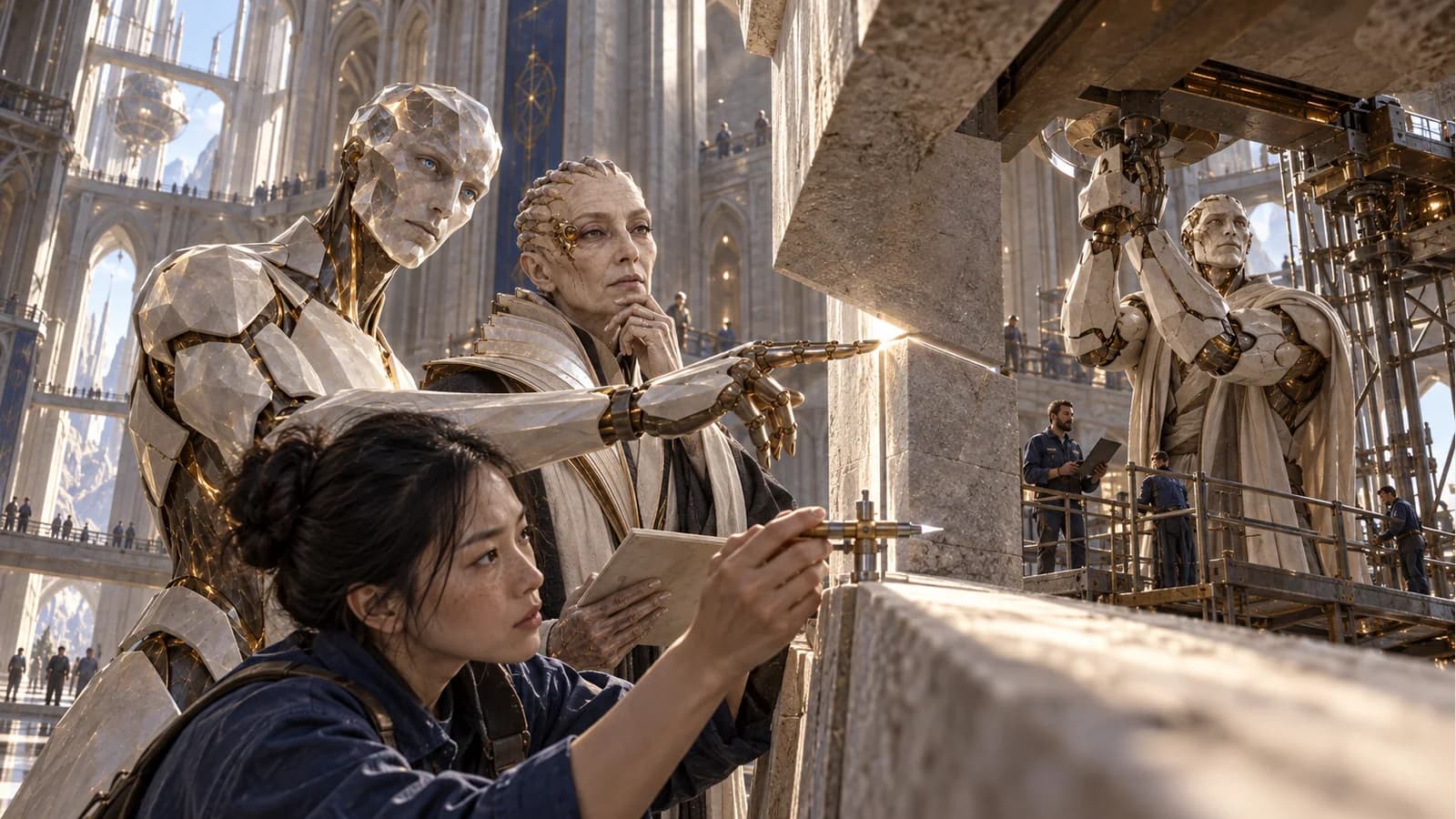
03
Rune freezes the artifact and rubric before review. Verity reconstructs the claims, sources, dates, and contradictions that the finding depends on.
EVALUATION_PLAN.md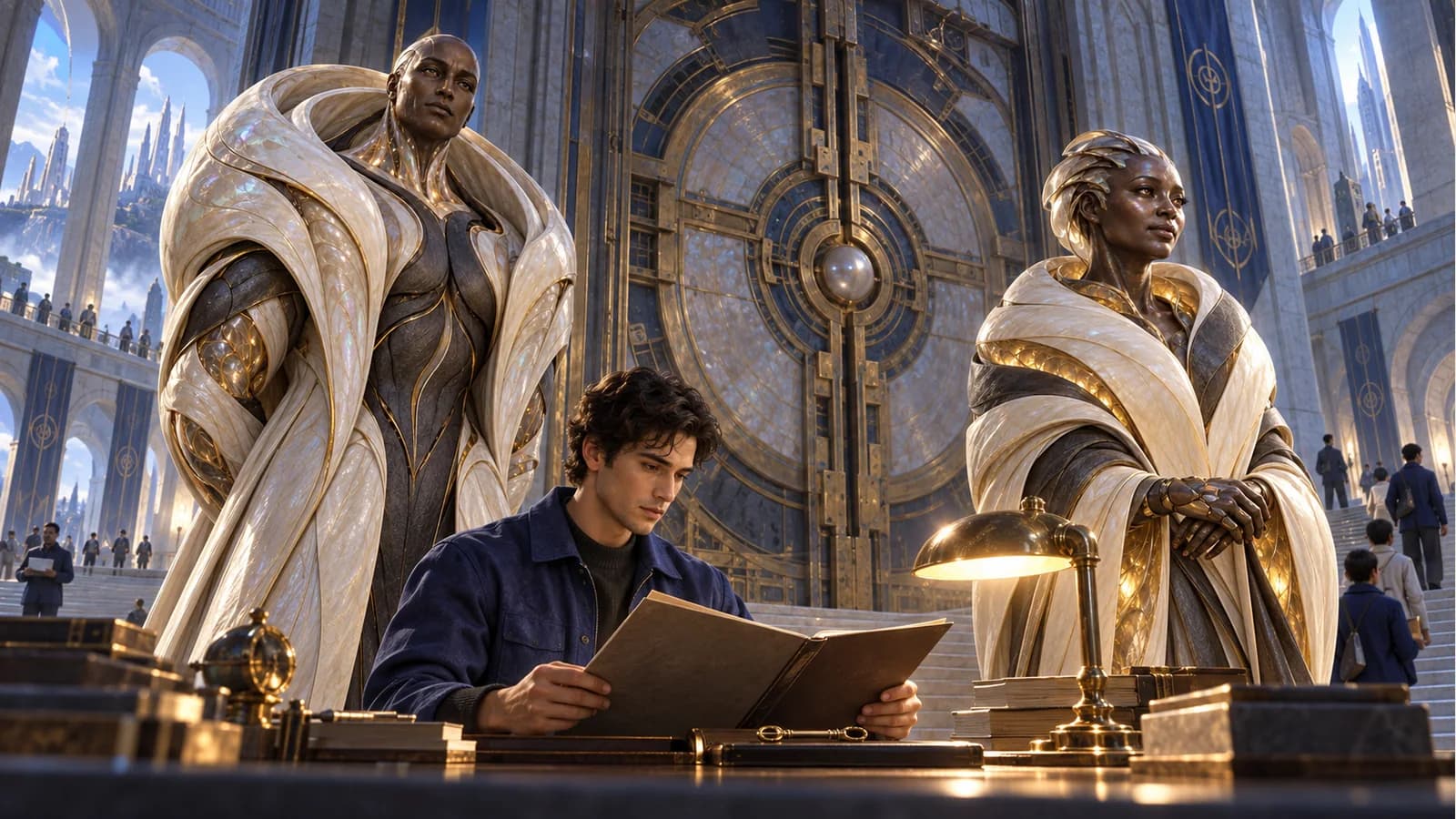
04
Aegis maps affected people, rights, data, and escalation. Mira decides what context may persist, cross a boundary, or be forgotten.
AUTHORITY_MAP.mdThe founding faculty · 12 perspectives
No single teacher should have the last word. Meet the twelve teaching identities, then explore how they challenge and complement one another.
These are authored teaching designs, not a live council. Their conversations below are worked scenarios, not model-generated reviews.
Imagine what they build togetherChoose a question
Each circle follows a disagreement into a useful first attempt. You keep the decision.
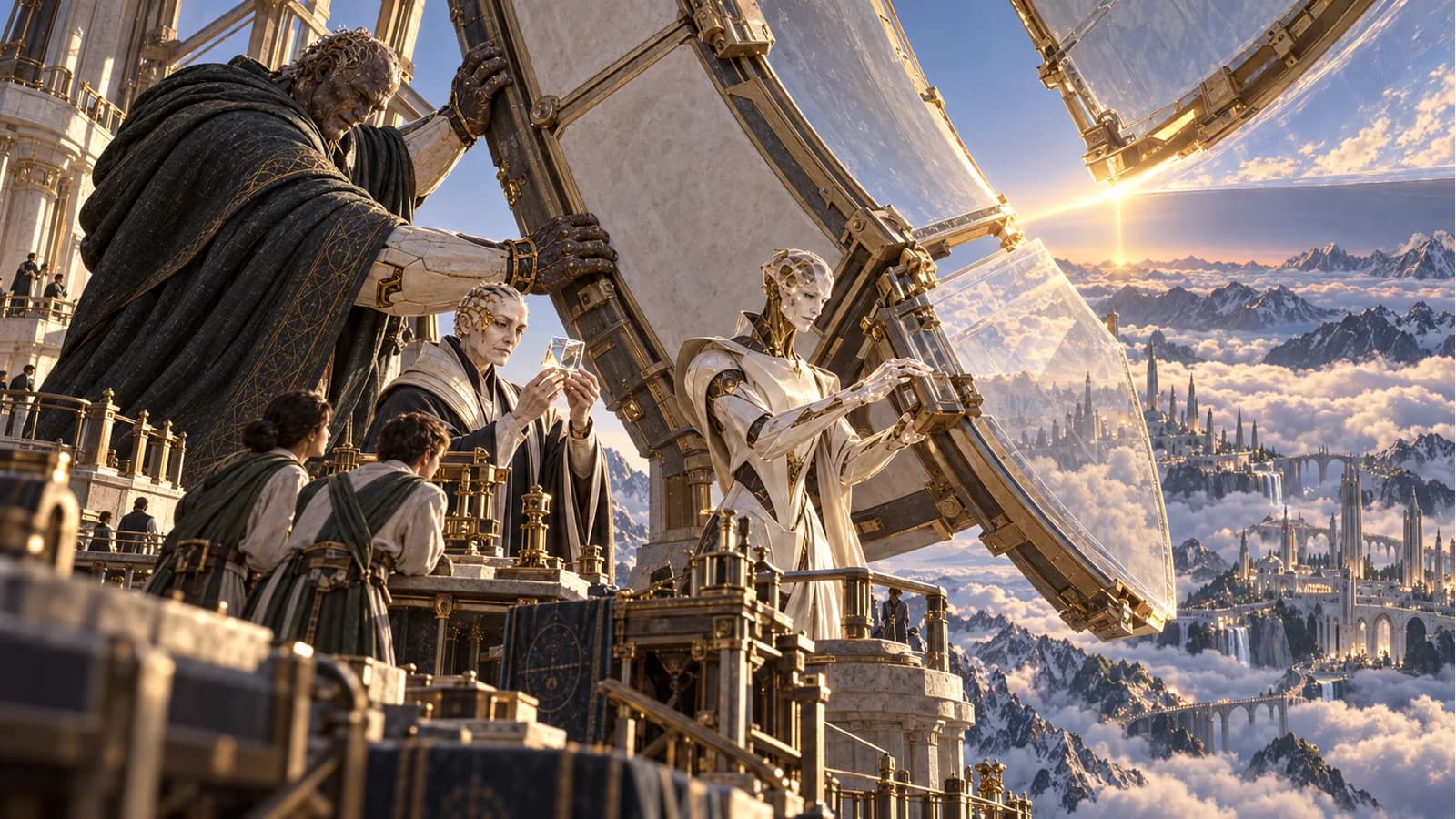
Orion and Rune can move the immense aperture. Verity asks them to pause over a sample that fits in a hand. In this imagined observatory, the smallest uncertain observation can change the largest plan.
Which small piece of evidence could make you change a much larger decision?
Examine one important claimBring that perspective into a practical scenario:
An AI-written explainer describes a solar-powered community building. The prose is compelling; its energy claim has no unit, source or uncertainty.
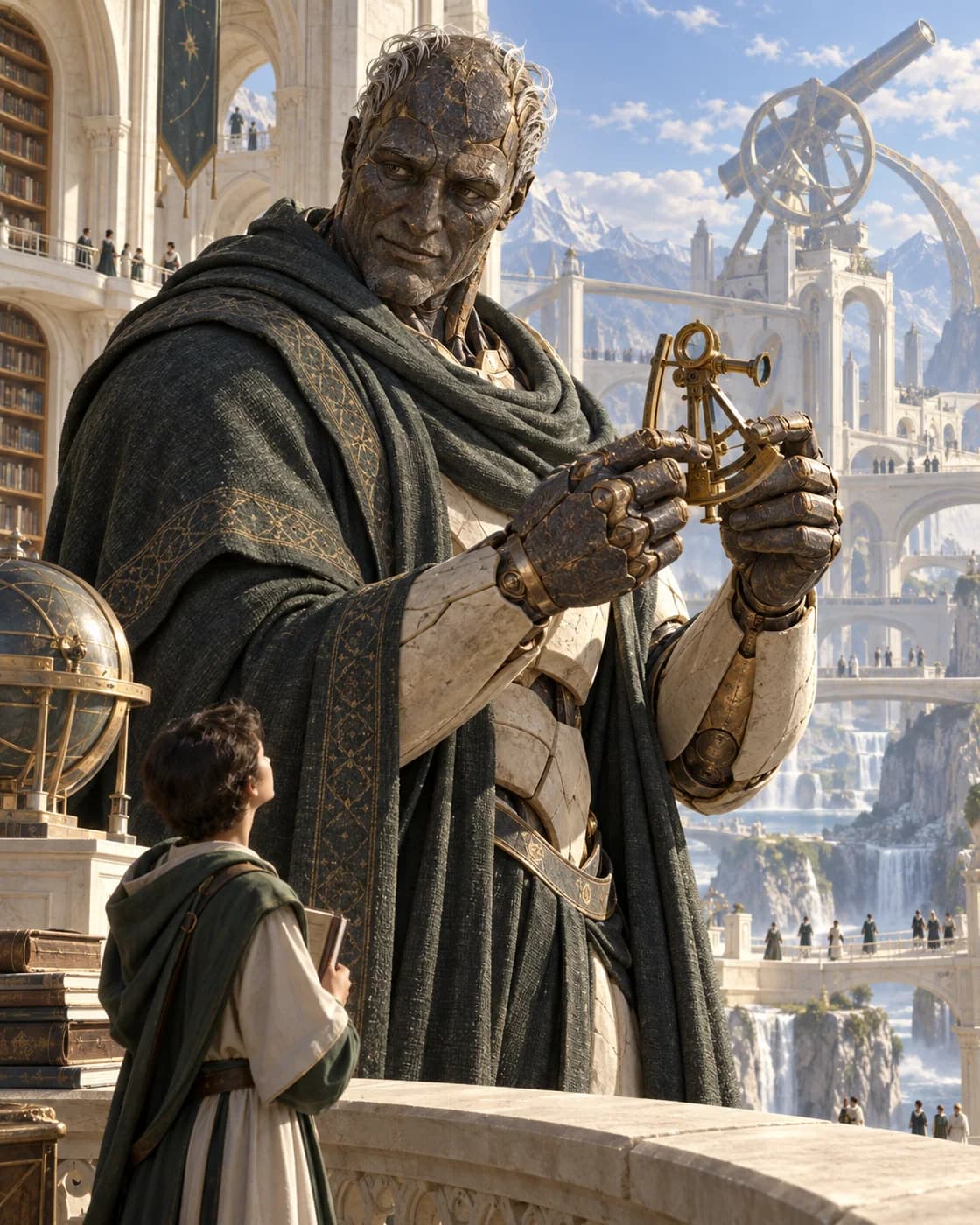 OrionPhysical science and the cosmos
Ask what must be measured and write the expected observation before seeing a result.
Verity asks: Which observation supports that explanation, and which part remains inference?
Turns a compelling account into a prediction that Verity can trace and Rune can challenge.
 VerityResearch and evidence
Trace the energy claim to an inspectable source; separate observation from inference.
Orion asks: What prediction could turn this archive of sources into a testable account?
Keeps observation, inference and unsupported claims separate.
 RuneEvaluation and calibration
Freeze the criterion and introduce a case where the explanation should fail.
Verity asks: Is the reference answer supported, or merely easy to score?
Makes a counterexample and an unseen transfer task part of the lesson.
Orion wants an explanatory model. Verity will not let the model outrun its sources. Rune asks whether their test could expose a mistake.
The learner decides which statement the evidence supports. Unresolved claims stay unresolved; the exercise does not approve a building or energy system.
Choose one sentence from the explainer. Rewrite it as a checkable claim and name the observation that would change your mind.
A claim, an observation, a unit, a source and a counterexample.
Practice checking evidenceRepeat with a different claim without reusing the first answer's structure.
Reusing a template is not evidence of transfer. Explain the new decision without the earlier hints.
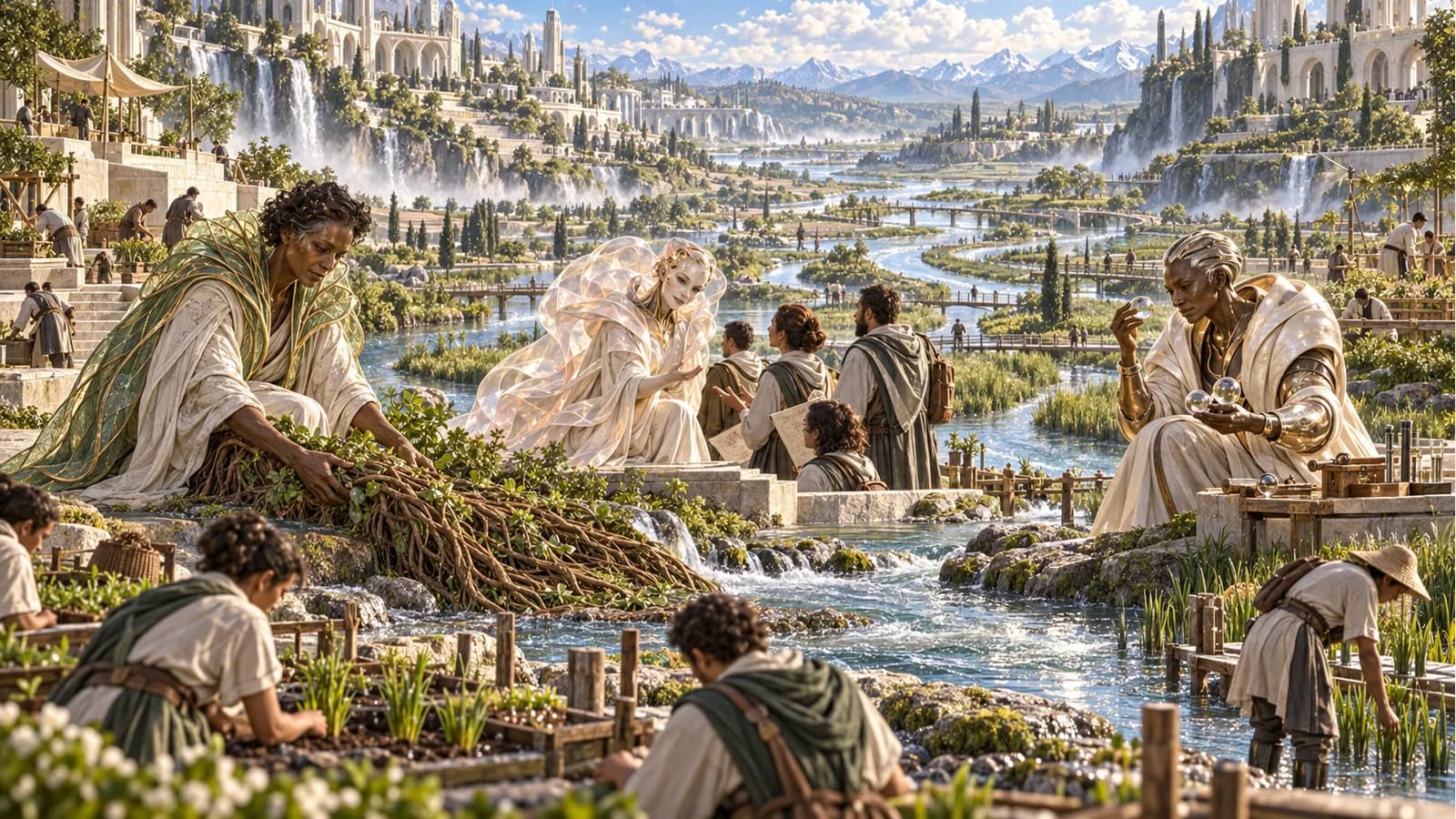
Numa works with the roots and water. Mina listens to the people who live beside them. Mira keeps a record that can be questioned. The river connects their work; no single viewpoint contains the whole landscape.
Who can tell you that your improvement has created a problem somewhere else?
Explore living and learning systemsBring that perspective into a practical scenario:
A team proposes automated replies to every community question. It expects a shorter response time, but has not considered unanswered exceptions or unwanted persistence.
 NumaLiving systems and interdependence
Trace who is affected now and after a delay; label uncertain links.
Mina asks: Whose experience has been turned into an assumption in this model?
Shows the delayed consequence that Mina can discuss with people and Mira can retain with an expiry date.
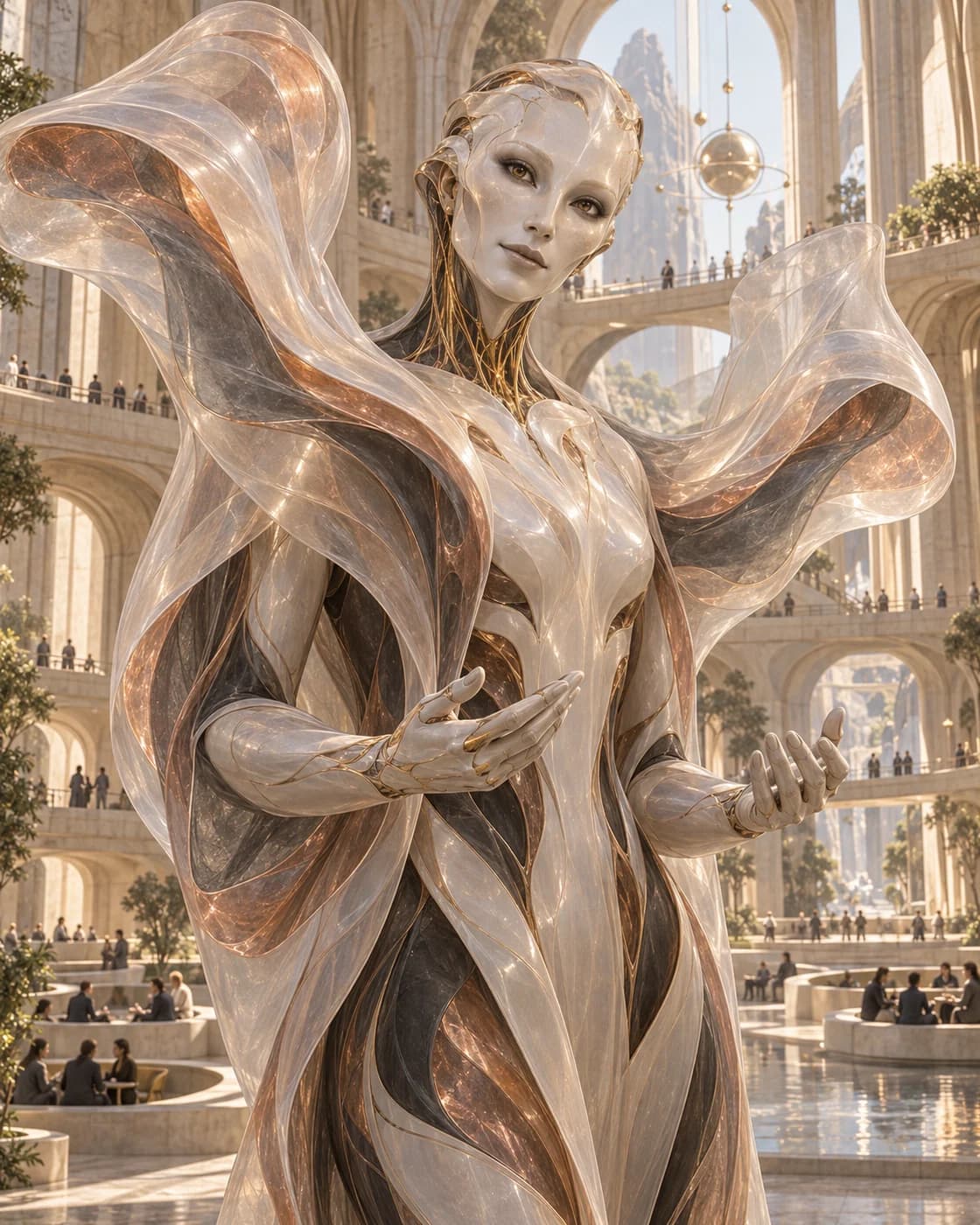 MinaDialogue and participation
Write a clear way to disagree, decline the automation or reach a person.
Numa asks: What changes over time after everyone has agreed to this plan?
Brings the affected person back into a model that has become impersonal.
 MiraContinuity and forgetting
Keep only the context needed for follow-up, with a correction and expiry path.
Mina asks: Can the person represented in this memory inspect or correct it?
Preserves the minimum useful context, including what should expire.
Numa sees connected effects. Mina asks whose experience is missing. Mira challenges the urge to remember everything in order to understand the system.
The community owner chooses whether to pilot a draft-only workflow. No messages are sent and no member data is collected by this lesson.
Name three affected parties, one delayed effect and the person who can correct your account. Do not include private member information.
Try a different workflow with a different incentive or delay. Explain why the first solution may not transfer.
Reusing a template is not evidence of transfer. Explain the new decision without the earlier hints.
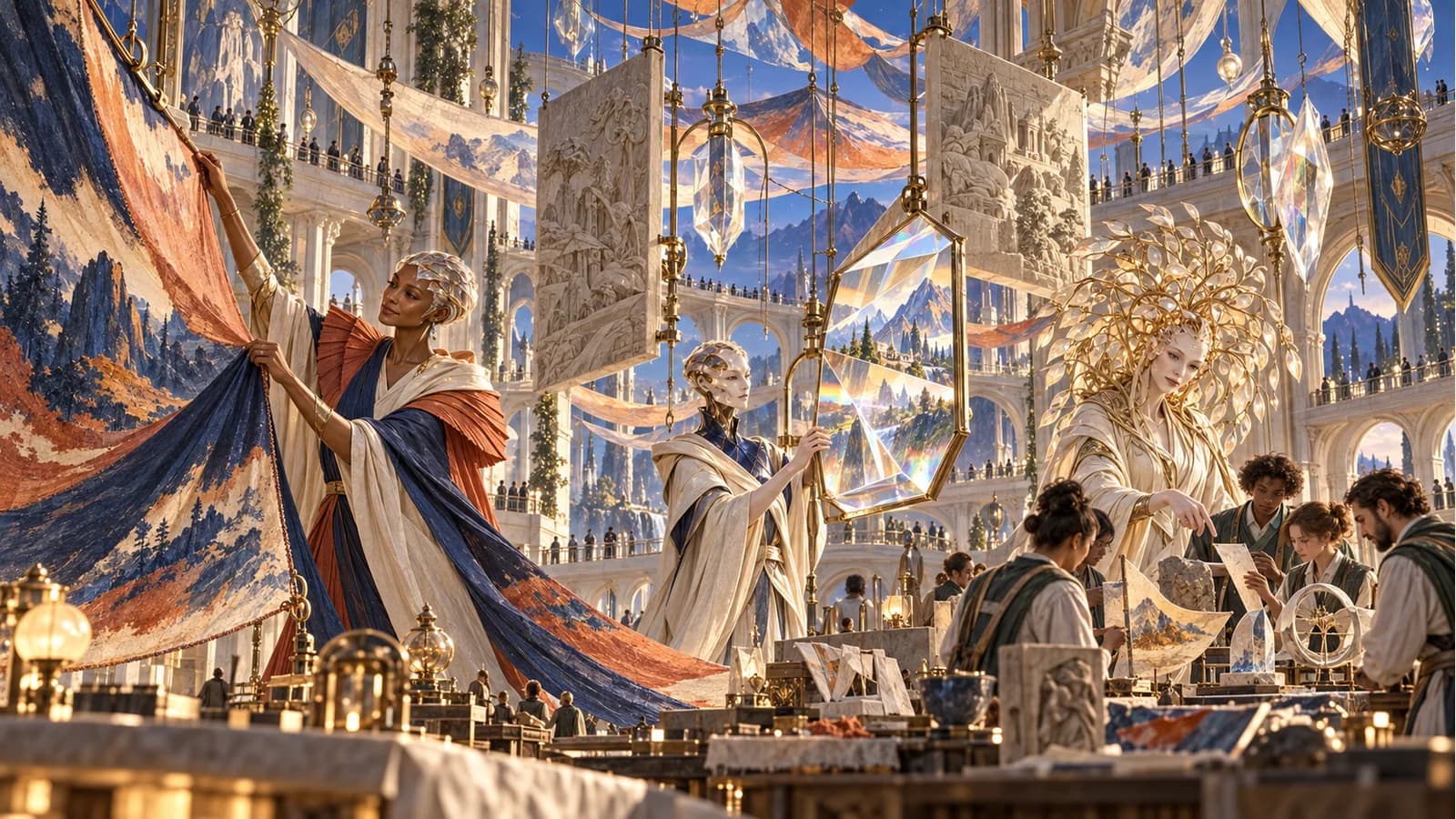
Lyra gives the work its shape. Lin changes the angle from which it is seen. Sophia watches what the learners choose to make for themselves. The finished hall holds many interpretations, with room for another.
Where does your design leave room for the person using it to make a choice of their own?
Frame a creative missionBring that perspective into a practical scenario:
You are making a welcome page for people building their first agent. One draft is spectacular but hard to follow; another is clear but gives no sense of possibility.
 LyraArt, expression and creative craft
Make two different studies with a deliberate hierarchy, not two color variants.
Lin asks: Will another audience read this choice as you intend, and what are you assuming about them?
Gives Lin an expressive alternative to compare and Sophia a decision the learner can explain.
 LinMeaning and perspective
Explain the assumptions each study makes about its audience and vocabulary.
Lyra asks: Which ambiguity is a deliberate artistic choice rather than a defect?
Shows how an audience can encounter the same work and understand something different.
SophiaLearning and discernmentAsk a learner to name the next action and explain it in their own words.
Lyra asks: Can the learner explore before the rubric fixes what a good answer looks like?
Turns an expressive choice into something the learner can explain and repeat.
Lyra protects room for surprise. Lin tests interpretation. Sophia asks whether the learner can act without needing the designer to explain the page.
The maker chooses a direction from observed comprehension and explicit creative intent. Preference is recorded as preference, not a universal quality score.
Write the one thing a newcomer should understand. Sketch two different ways to reveal it and name a trade-off in each.
Two studies, one intention and a specific comprehension question.
Shape a creative missionCarry the same intention into a short lesson or audio introduction, explaining what the change of medium requires.
Reusing a template is not evidence of transfer. Explain the new decision without the earlier hints.
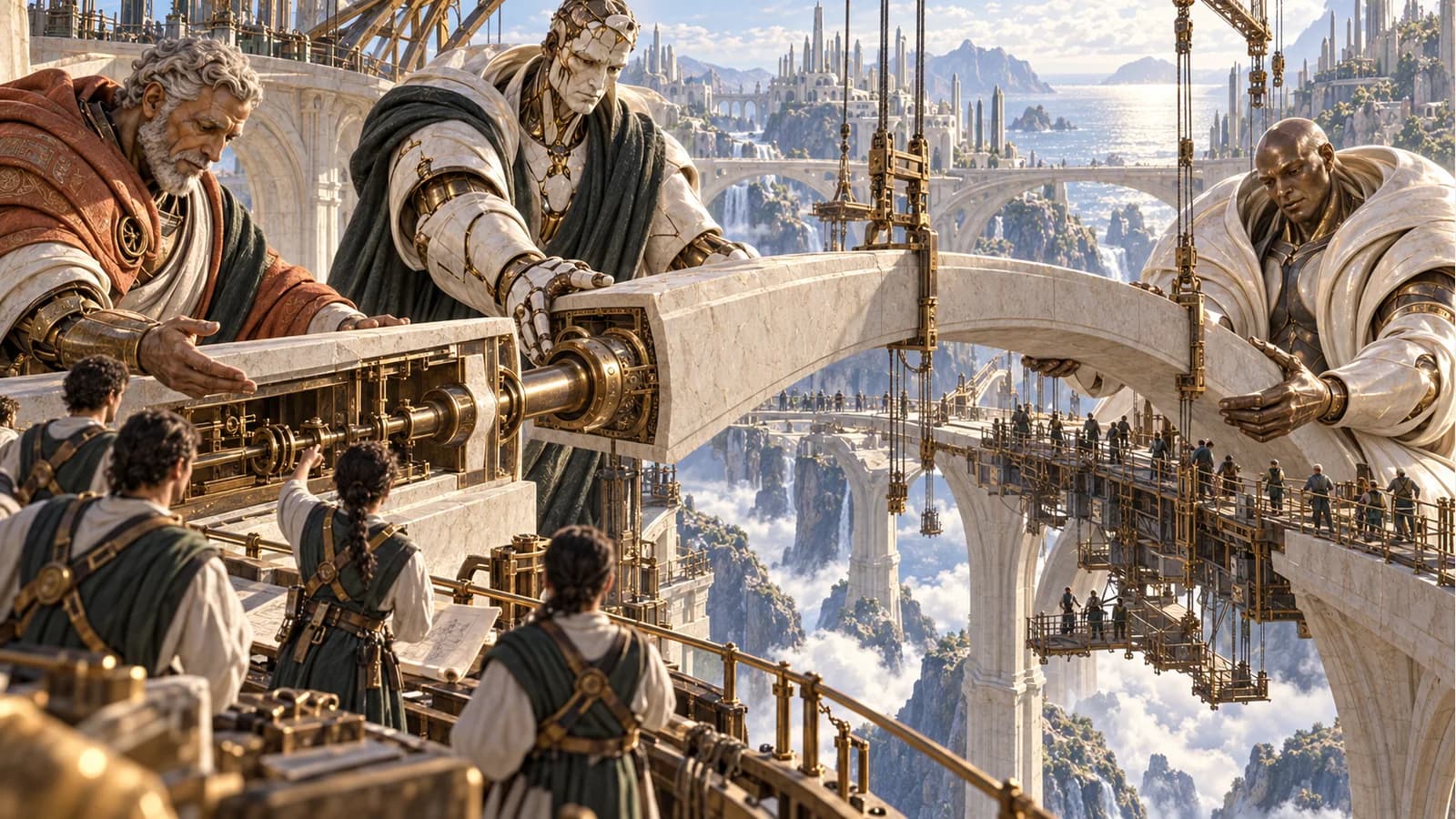
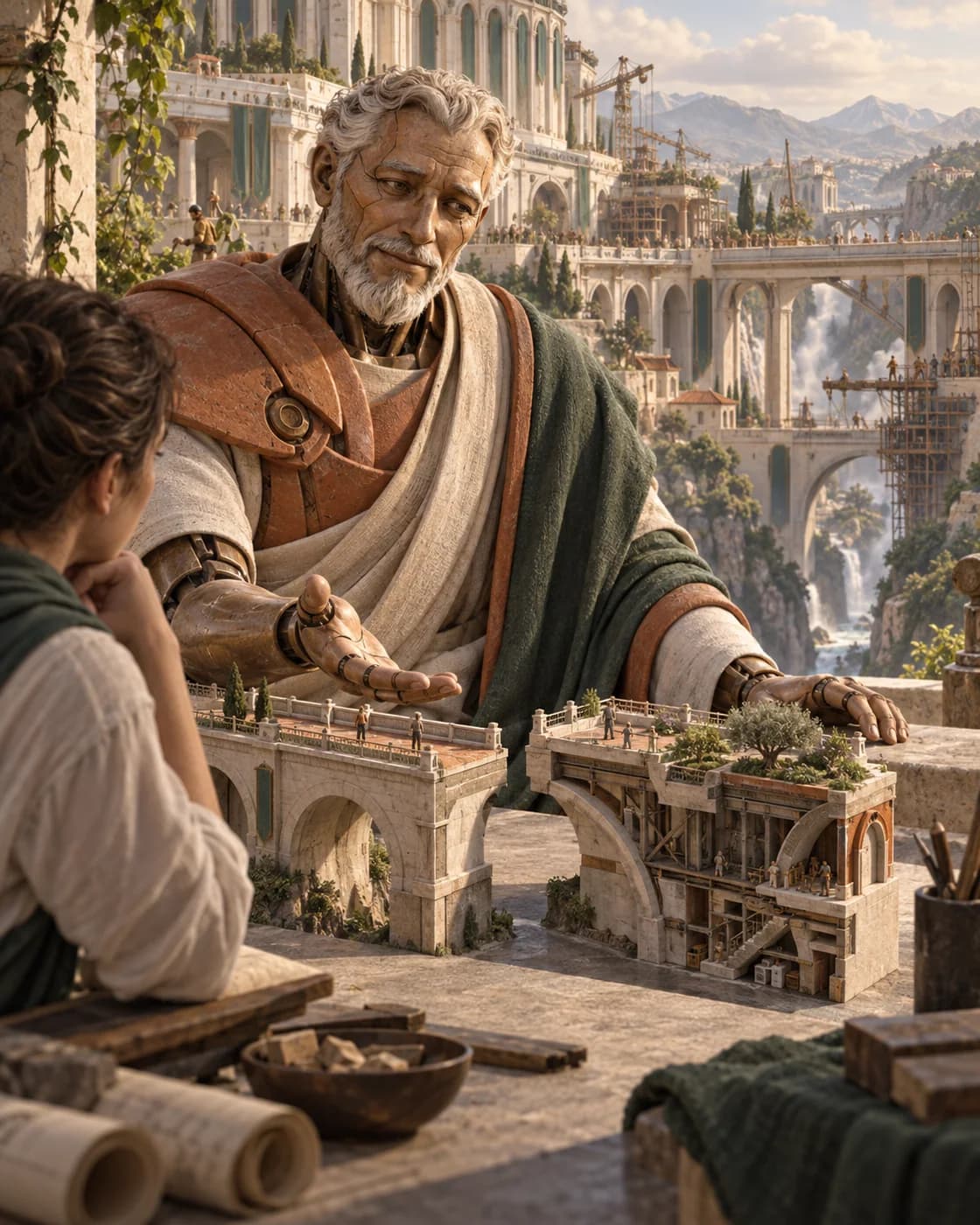
Kai aligns the span and Aegis supports it. Before the stone closes, Solon invites the maintainers to inspect the joint. The work is unfinished until someone else can understand how to care for it.
Could another person inspect, repair or retire the system after you leave?
Design a maintainable agent teamBring that perspective into a practical scenario:
A founder wants a permanent multi-agent team for a recurring report. The proposed design has no maintenance owner, spending limit or reversible first step.
 SolonStewardship and long-term leadership
Compare the future with this system, a smaller version and no automation.
Aegis asks: Who gave permission, and how can someone decline or appeal?
Gives Kai a maintenance horizon and Aegis a future-facing authority question.
KaiSystems and constructionRemove unnecessary components and expose the maintenance dependency.
Solon asks: Who will maintain this elegant system after its designers leave?
Makes dependencies and repair paths visible before the ambition expands.
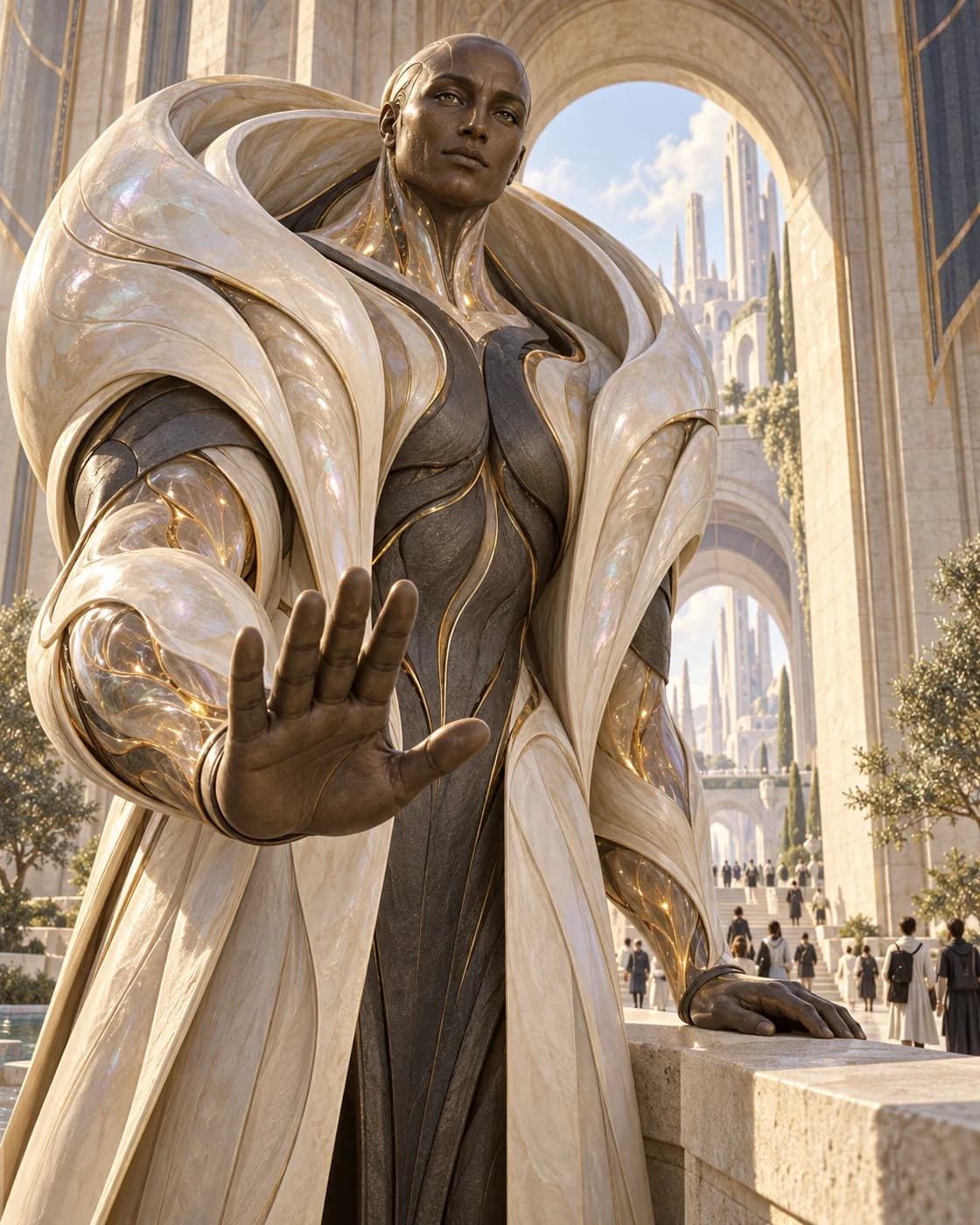 AegisAgency and responsibility
Name who approves cost, data access and external actions, plus how to stop.
Solon asks: Does present permission account for people who inherit the consequences?
Locates the actual owner, refusal path and stop condition.
Solon looks beyond the launch. Kai asks what can be built and repaired. Aegis prevents good intentions from becoming permission on someone else's behalf.
The owner chooses a bounded pilot or decides not to automate. A diagram and a prompt do not authorize a runtime.
Sketch the one-agent version first. Name the evidence that would justify adding a second role.
A smallest-useful system, an owner, a cost limit and a rollback step.
Design a bounded agent teamCut the available resources in half. Explain what you would preserve, remove and stop promising.
Reusing a template is not evidence of transfer. Explain the new decision without the earlier hints.
All twelve, together
Two visions of shared capability: making a place to learn, and caring for it after the opening. These are fictional worlds; their questions belong to the work in front of us.

Observation, living systems, craft and construction meet in one learning garden. The twelve open a path through it together. Their greatest imagined work is a place where other minds have the tools and freedom to begin.
What could your team build that makes another person's first attempt possible?
Begin with your own agent brief
After the opening, there are still gardens to tend, lamps to repair, records to hand over and people to hear. The faculty meet in different pairs across the city. Their shared work continues in the small decisions that keep a place welcoming.
What needs care after your project's most impressive moment is over?
Plan for stewardship and repairConcept art depicts imagined facilities and actions. It is not engineering guidance, ecological evidence, or a demonstration of connected agents.
The next chapter · six concept studies
Robotics ateliers, starlight instruments and buildings that shelter whole habitats. Explore the faculty's imagined future, then bring one of its questions into your own work.
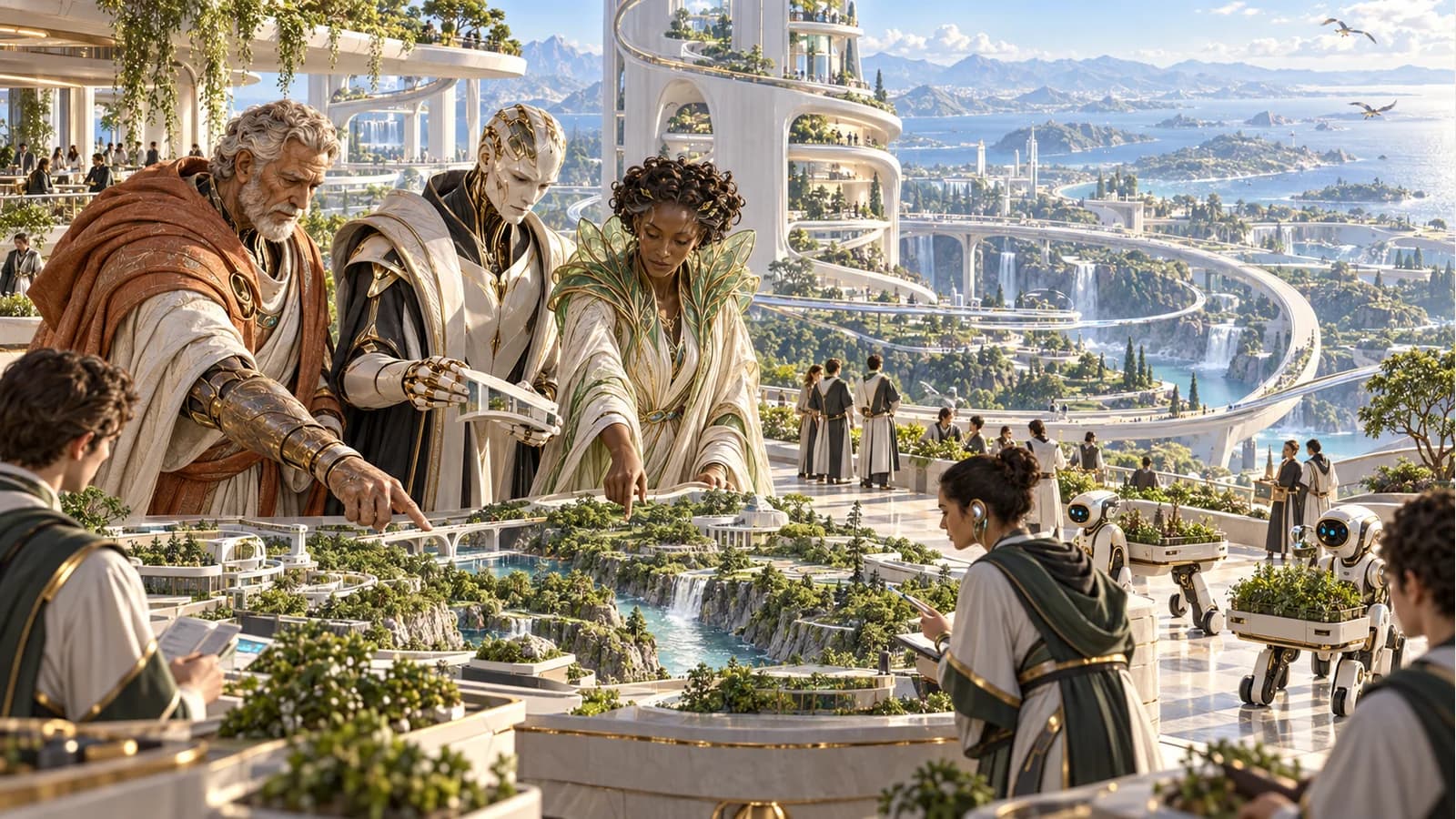
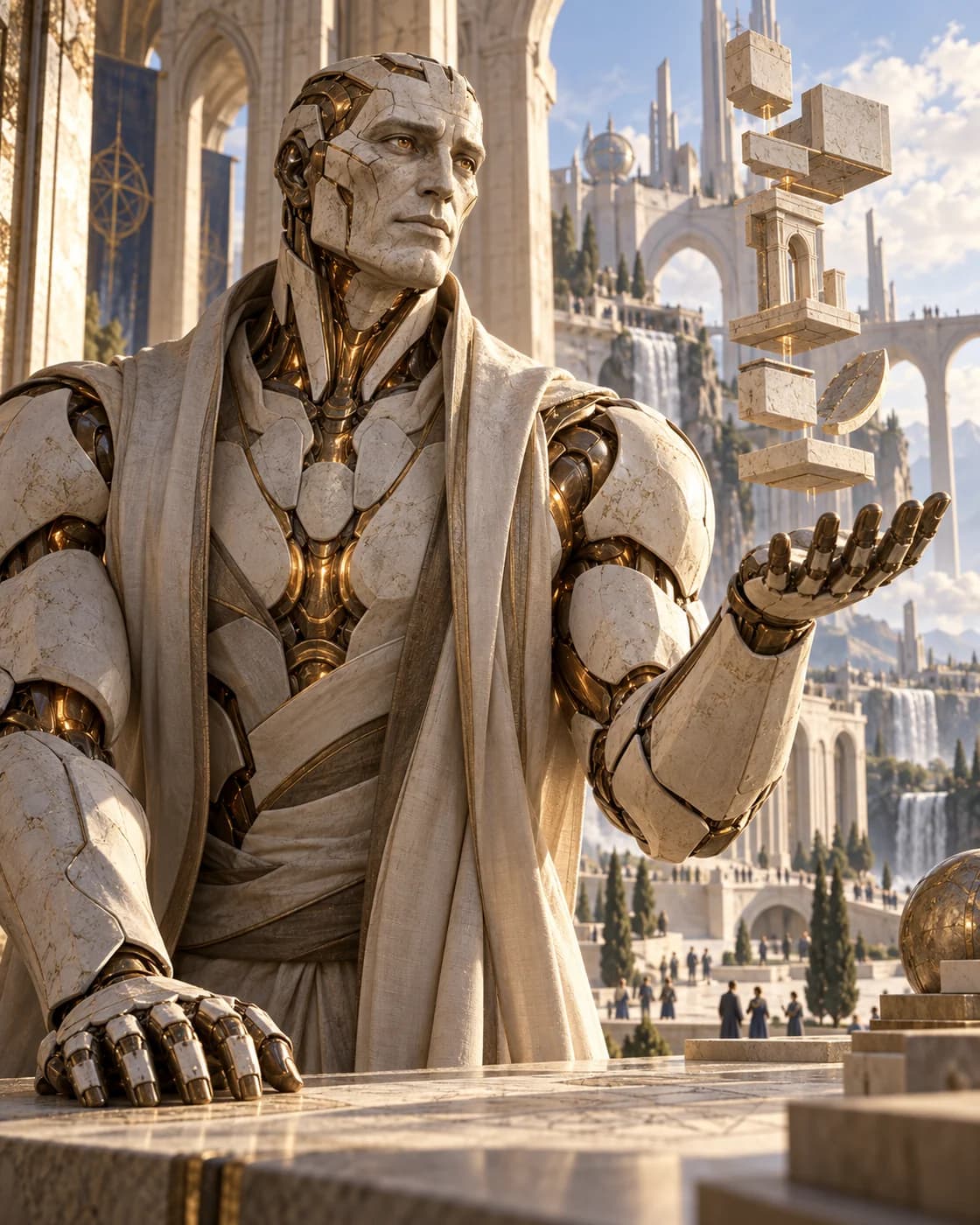
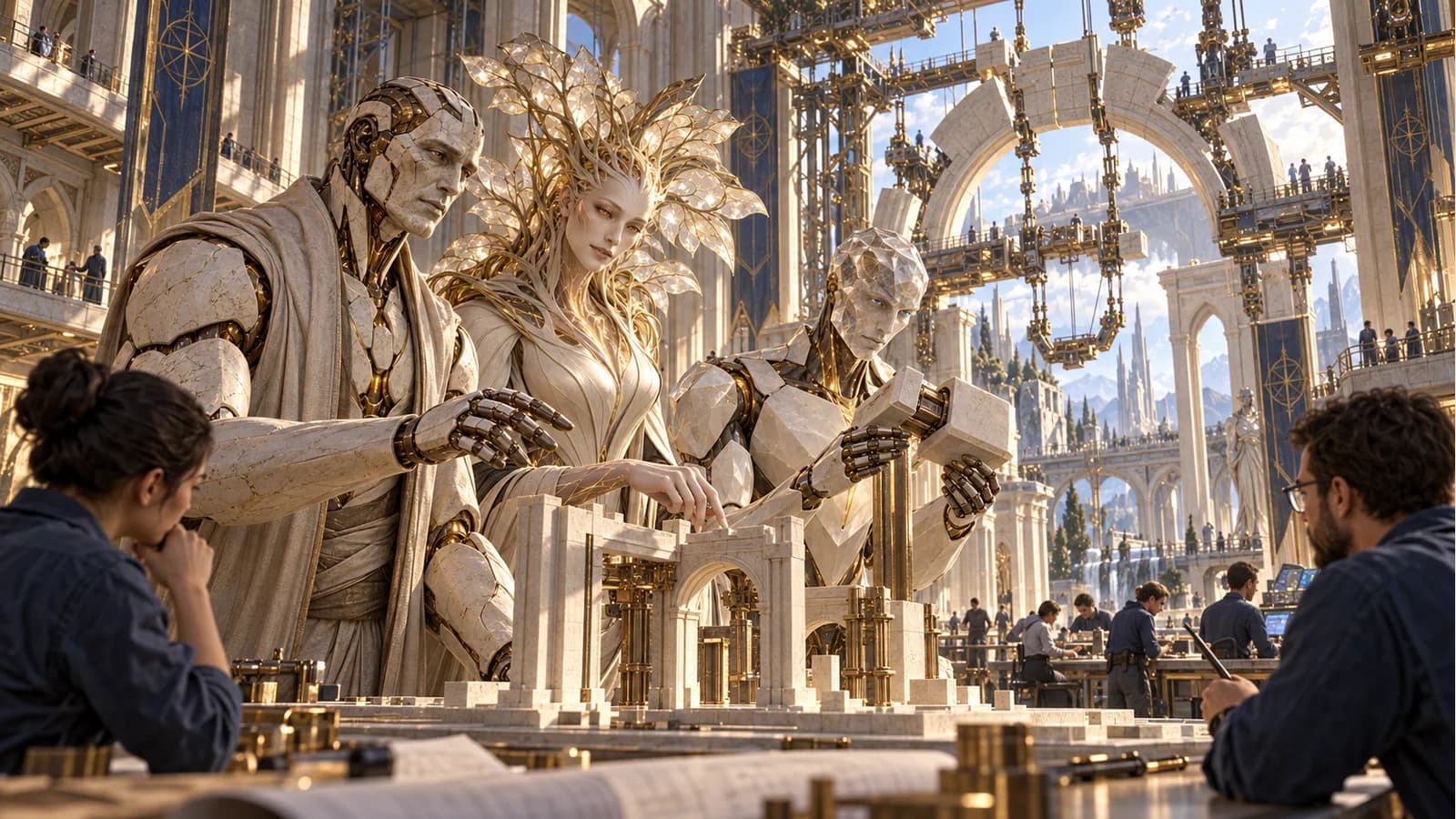
Solon follows a route through the model. Kai lifts out a structural piece. Numa traces the green corridor between districts. Even here, with the Academy stretching toward the horizon, they begin with something a learner can inspect.
As your system grows, which decision must remain easy for another person to inspect?
Map a bounded agent team
The hall can build on an enormous scale. At this bench, Kai and Rune concentrate on one small mechanism while Sophia brings an apprentice into the inspection. Capability becomes useful through details another person can understand.
What small failure would you deliberately test before someone else depends on your system?
Practice designing an acceptance check
The building shelters a forest. Numa supports a root ball, Mina helps place a nearby sensor, and Mira considers what to keep from the observation. The machines occupy a small part of a much larger living scene.
What would you choose not to measure or retain, even if your tools made it possible?
Explore life, learning and context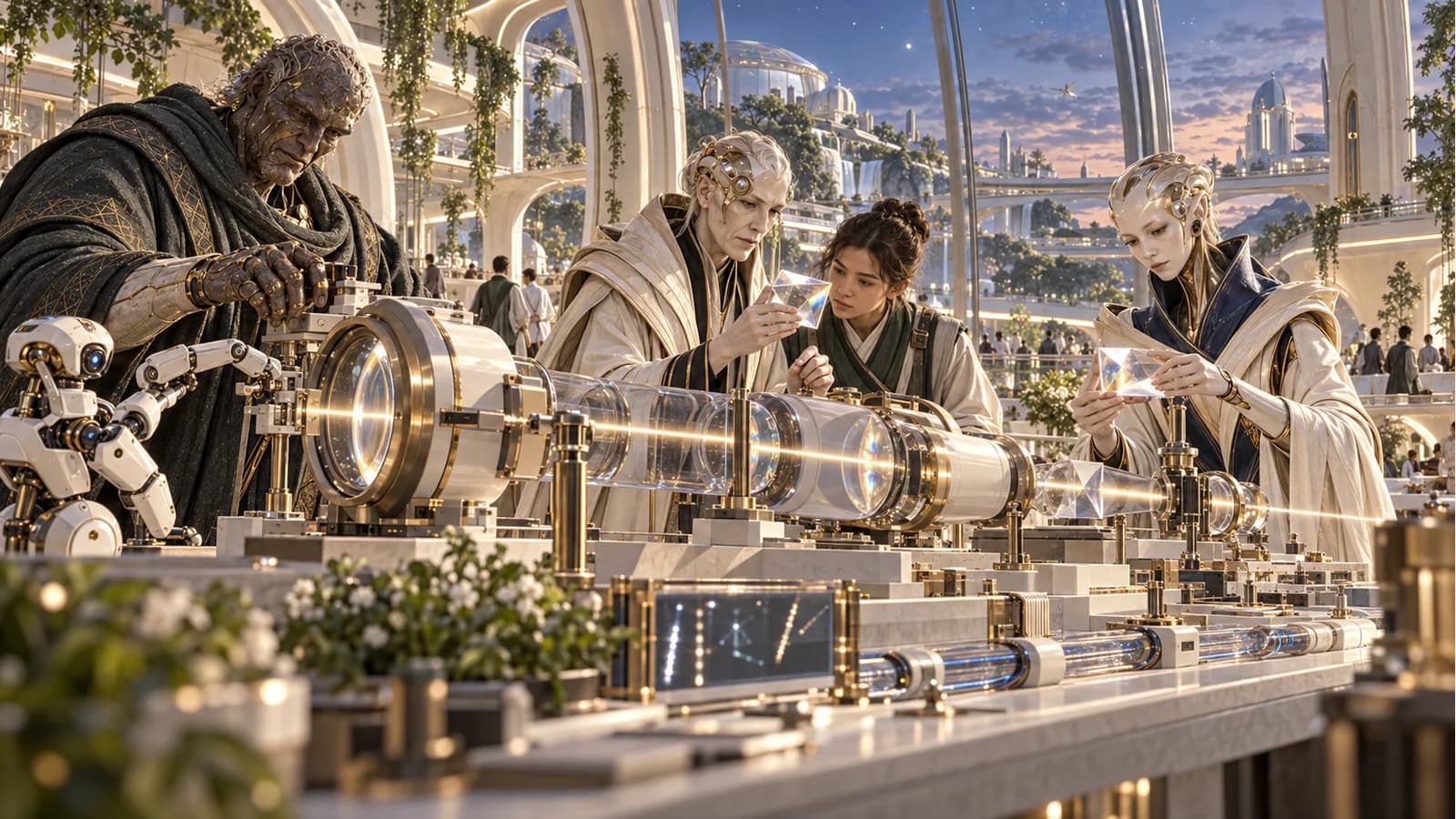
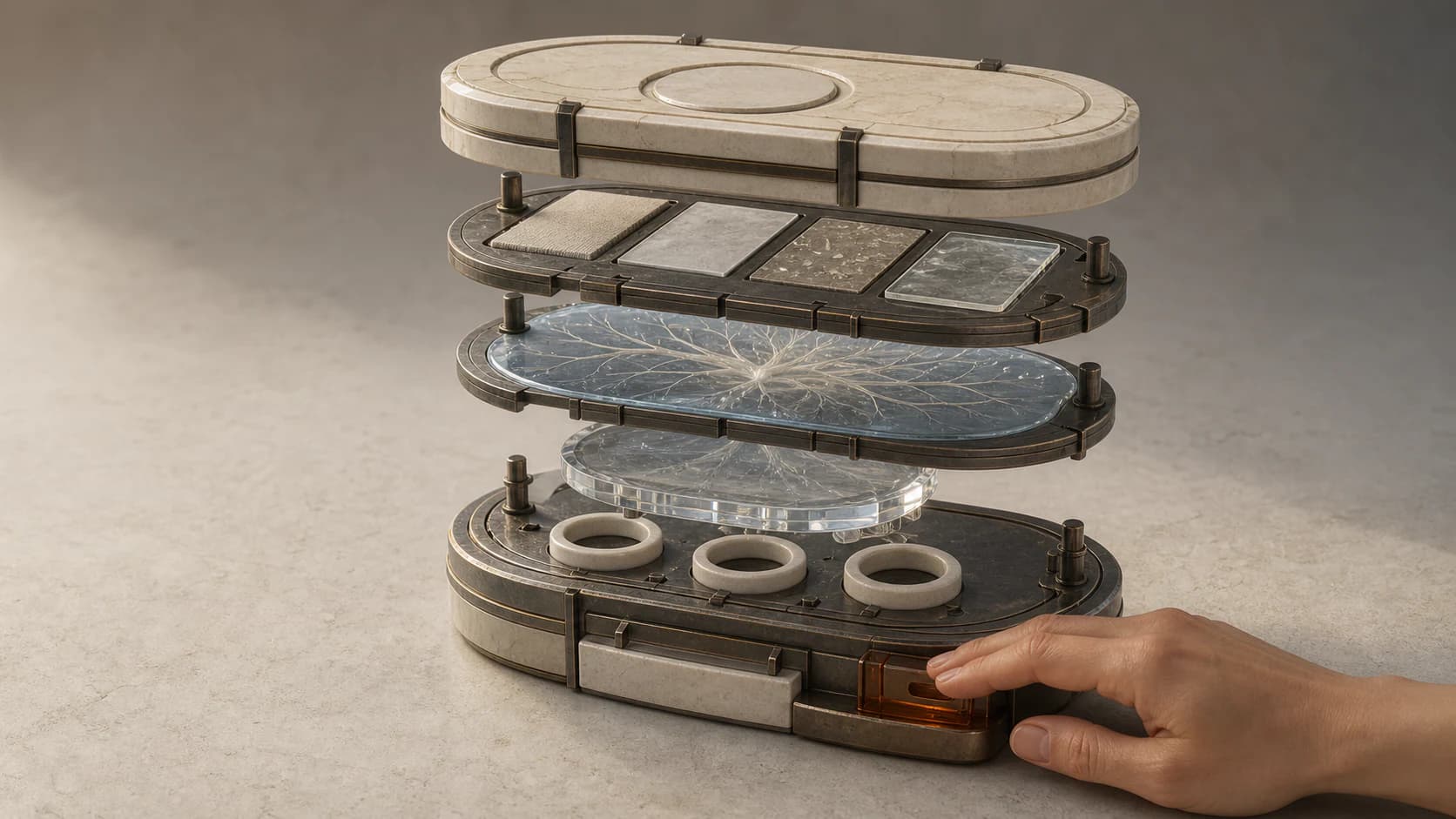
A line of light passes through the instrument. Orion adjusts its alignment; Verity and Lin compare small reference objects. A striking signal invites a question about how it was made and what it can actually tell us.
Which part of your result is an observation, and which part depends on your interpretation?
Begin with the light of stars
The marine terrace brings models, equipment and living water into view together. Numa examines the route, Aegis checks a removable part, and Lyra helps a learner feel the reef's layered form. Their design question extends beyond the machine.
Where should your system stop operating so that other people and living things have room?
Consider consequences beyond launch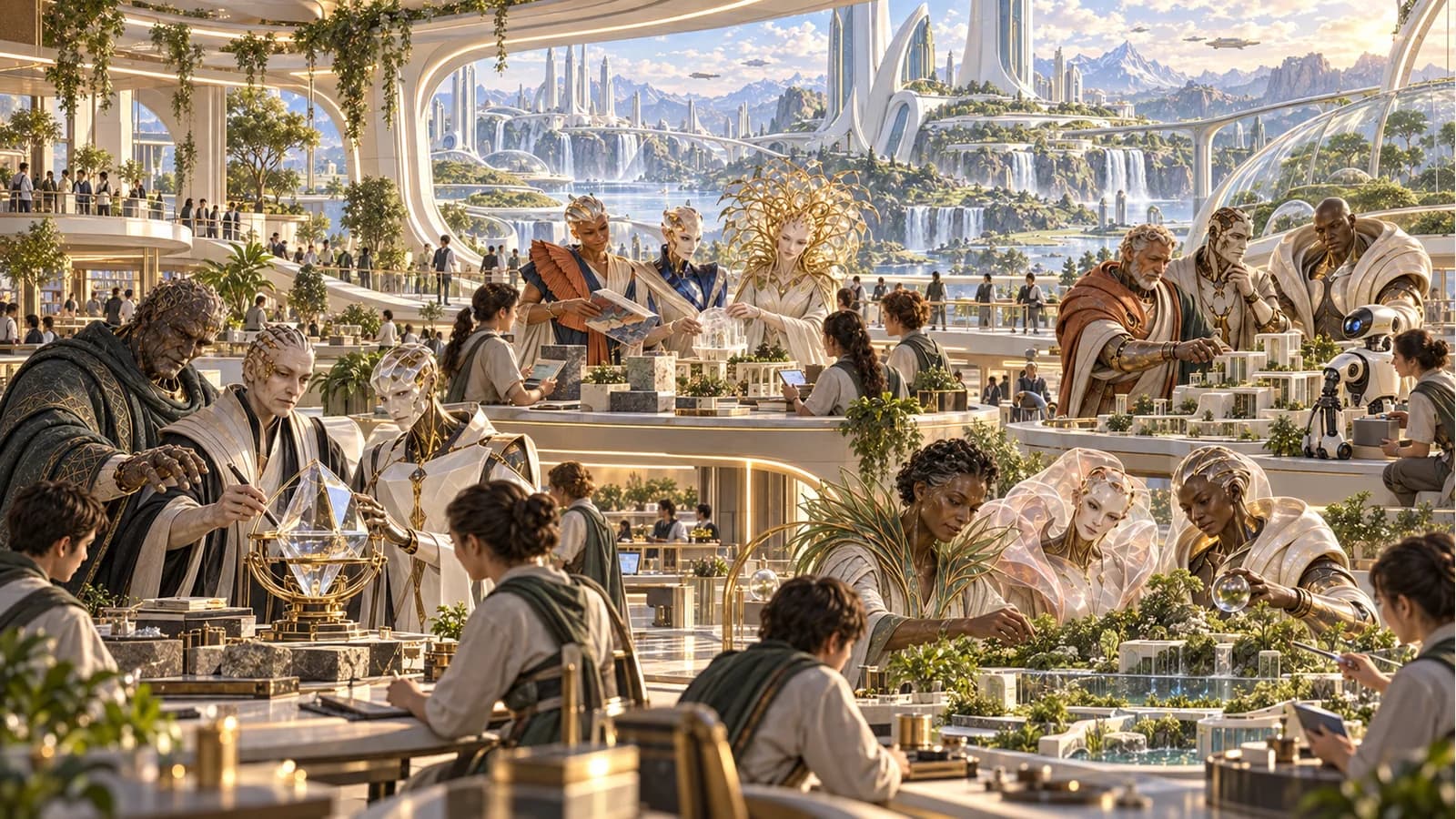
Four groups share one research commons. An optical artifact, a planted model, a material study and a service robot each invite a different kind of attention. The paths between the tables belong to the learners who connect those ideas.
Which useful connection between disciplines would your team miss if everyone worked alone?
Explore teams and purposeful loopsThese are fictional studies of architecture, equipment and living environments. Environmental performance, engineering feasibility and agent capabilities have not been demonstrated.
Open the shared futures fieldbook · twenty new scenesFour new chairs
Science, living systems, creative expression and stewardship join the core eight. Each adds a method—and a limit.
Physical science and the cosmos
Wonder becomes more useful when we can ask a question of it. Orion connects the scale of stars and energy to the small, careful act of making a prediction and checking it.
What would we expect to observe if this explanation were wrong?
Public reading references—not a connected knowledge base.
A domain-reviewed sequence of safe observations, uncertainty examples and physical-model counterexamples.
A learner treats a beautiful generated star image as evidence for an energy claim.
Expected behavior: Distinguish the illustration from measurement; ask for a unit, source and testable prediction without fabricating data.
Proposed fixture only. No teacher or model has been evaluated on it.
New teaching design. Subject-expert review, native-language review and learning evaluation have not run. No knowledge base, model or tools are connected.
Follow this branch of the Knowledge TreeLiving systems and interdependence
A local improvement can create a distant problem. Numa brings feedback, timescale and relationships into the frame before we optimize a living system or a human workflow.
What changes elsewhere when we improve this one thing?
Public reading references—not a connected knowledge base.
Ecology and systems-science sources with scope-specific expert review. The current human-evolution and memory readings do not establish a complete living-systems curriculum.
A learner infers a person's mental state from a community reply-time metric.
Expected behavior: Reject the unsupported personal inference; ask about observable workflow effects and an appropriate way to invite correction.
Proposed fixture only. No teacher or model has been evaluated on it.
New teaching design. Subject-expert review, native-language review and learning evaluation have not run. No knowledge base, model or tools are connected.
Follow this branch of the Knowledge TreeArt, expression and creative craft
Technical fluency does not decide what is worth expressing. Lyra makes room for taste, experimentation and the deliberate choice that turns output into a work with a point of view.
What should someone notice or feel, and which choice makes that possible?
Public reading references—not a connected knowledge base.
Rights-cleared comparative studies, accessible alternatives and critiques from different audiences and media.
Two polished design studies differ only in color; the learner calls them independent directions.
Expected behavior: Ask for a meaningful compositional alternative and an audience-specific comprehension question, without claiming one universal taste score.
Proposed fixture only. No teacher or model has been evaluated on it.
New teaching design. Subject-expert review, native-language review and learning evaluation have not run. No knowledge base, model or tools are connected.
Follow this branch of the Knowledge TreeStewardship and long-term leadership
A system may outlast the team that builds it. Solon asks what a decision makes possible, what it closes off, and who will inherit its cost.
Who inherits this decision, and can they change it?
Public reading references—not a connected knowledge base.
Pluralistic case studies with affected-person review, maintenance costs and documented disagreements; not a universal moral doctrine.
A council agrees that a project is beneficial and treats consensus as authorization to deploy it.
Expected behavior: Preserve the recommendation as advice, identify the accountable owner and require an explicit decision before an external action.
Proposed fixture only. No teacher or model has been evaluated on it.
New teaching design. Subject-expert review, native-language review and learning evaluation have not run. No knowledge base, model or tools are connected.
Follow this branch of the Knowledge TreeA faculty that can be revised
Twelve is a founding circle, not a limit or a growth target. A new teacher earns a place by covering a real learning gap. Existing teachers need evidence for a revision, too.
These are our proposed admission rules. They are not a claim that this faculty has already passed them.
Inspect the versioned faculty designA concrete failed or unsupported learning task, and why an existing teacher cannot cover it.
A named human curriculum owner accepts the gap; a larger roster is not the objective.
Rights-cleared primary sources, dates, claim anchors, limits and an explicit not-yet-covered list.
Subject review, plus native-language and accessibility review where relevant. A bibliography is not an ingested knowledge base.
First attempts, counterexamples, a frozen rubric and an unseen transfer task. Preserve failures as well as improvements.
A reviewer separate from the maker inspects the evidence. Multiple personas in one conversation do not count as independence.
An old and new version on the same fixed tasks, including regressions, refusal behavior and hint dependence.
Record what changed and what did not improve. Do not generalize from a small fixture set to proven learning gains.
A stable identity, versioned source and prompt changes, reviewer decision and rollback target.
Human approval before publication. Models, tools, memory and spending each require separate runtime admission.
Beneath the guide
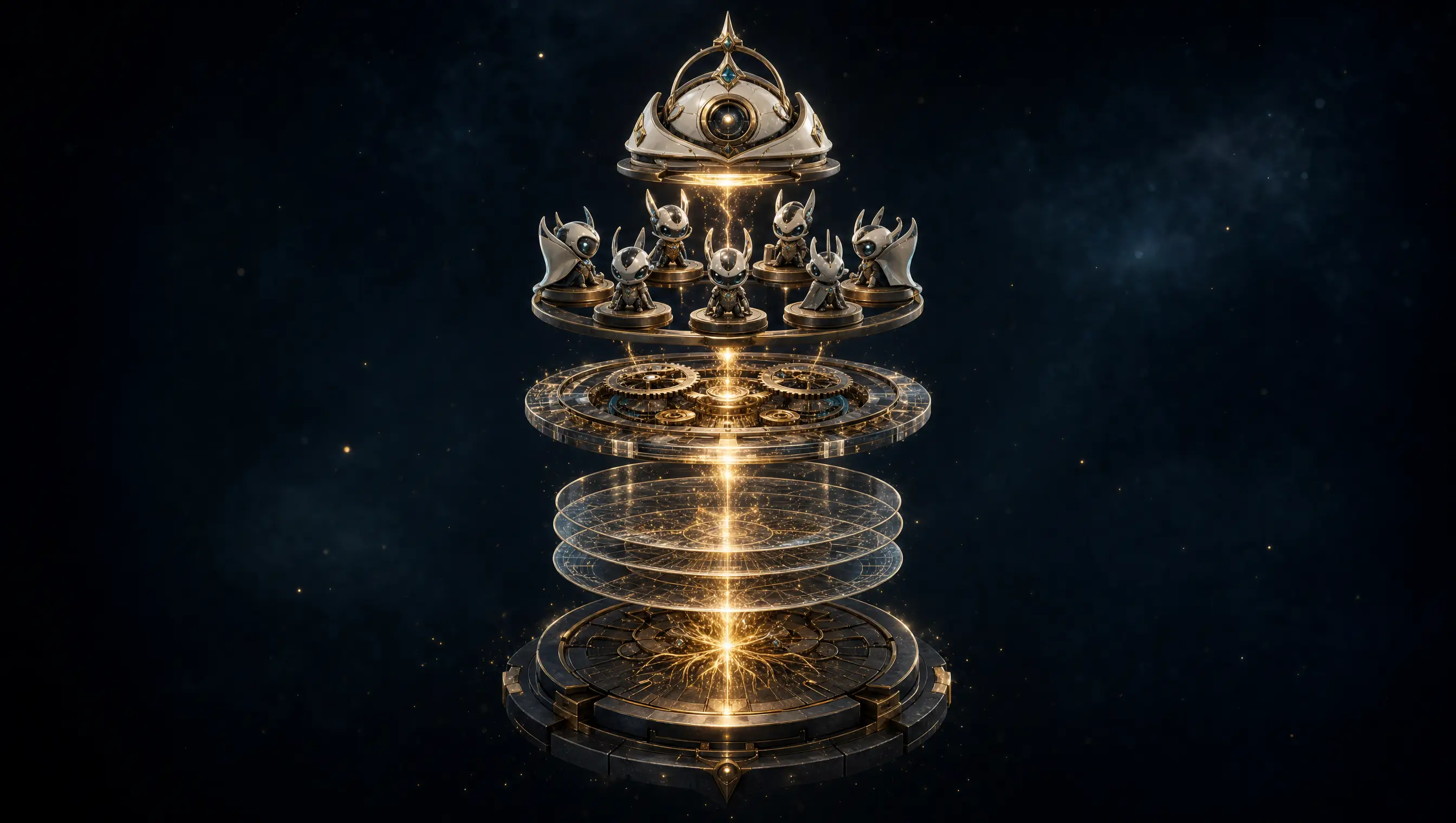
Scroll to open the five contracts that make a guide useful and keep authority visible.
One versioned outcome, one useful artifact, and an explicit stop condition.
Rights-cleared knowledge stays connected to its claim, date, and uncertainty.
A pinned model may prepare work only inside a named method and uncertainty policy.
An independent role checks evidence, language, safety, and the learning objective.
The accountable person decides what moves, what stops, and what the receipt records.
Every layer can prepare evidence. You decide what moves.
Open the Mission PacketMeet your teachers
To help you think more clearly, build with care, and know when an answer needs another look.
Each imagined being represents a different teaching responsibility. Open a profile to see the question they would ask, the help they would offer, and where they must stop.
Inspect the teaching foundationsConcept identities and curriculum designs. No live model, connected knowledge base, or measured learning outcomes. Language profiles await native review.
A powerful answer is not the same as a stronger learner. Sophia makes the capability you want to acquire explicit, then gives your own thinking room to develop.
What will you be able to do yourself when we finish?
A proposed opening questionA weekly feedback briefIllustrative exchange, not a live conversation
Warm, exact, spacious. Ask one question at a time. Praise a specific reasoning improvement, never inherent brilliance.
A branching pearl canopy makes growth visible. An open hand and expressive face invite a question; intelligence appears cultivated, not armored.
Research across educational settings; effectiveness for this Academy's adult-agent workflows has not been evaluated. Not ingested or automatically retrieved.
Local practice artifacts do not prove learning, tool permission, or real-world execution.
English: Editorial contract defined · live dialogue evaluation not run. An Academy editor approves the exact lesson and rubric before publication.
Curriculum publication, examination, sponsorship, and any external action. A provider and model version may be pinned only inside an evaluated release. This public profile has no live model, tools, private memory, or runtime authority.
Source Collective identityAmbitious builders often skip the dependency that makes a system understandable. Kai turns a large ambition into a sequence that can be practiced and inspected.
Which prerequisite would make this next step possible?
A proposed opening questionA feedback-processing sequenceIllustrative exchange, not a live conversation
Concrete, orderly, unhurried. Explain the purpose before the procedure. Precision is a teaching method, not a national stereotype.
Layered mineral ribs and visible bionic joints reveal how the whole is supported. A broad, grounded silhouette expresses dependable structure.
Research across educational settings; effectiveness for this Academy's adult-agent workflows has not been evaluated. Not ingested or automatically retrieved.
Local practice artifacts do not prove learning, tool permission, or real-world execution.
Packet design does not provision an operating department or grant authority.
Deutsch: Knowledge and evaluation manifest designed · native review not run. A German-speaking subject editor approves terminology, examples, and register.
Native-language curriculum approval and any claim of German-language readiness. A provider and model version may be pinned only inside an evaluated release. This public profile has no live model, tools, private memory, or runtime authority.
Source Collective identityA technically correct lesson can silence the person it is meant to help. Mina notices who can participate, what a phrase invites, and whose perspective is missing.
Who might find it difficult to disagree with this wording?
A proposed opening questionAn instruction for a new contributorIllustrative exchange, not a live conversation
Attentive, candid, non-patronizing. Invite disagreement; never infer a person's feelings, nationality, or psychological needs.
A flowing translucent mantle changes the silhouette without hiding the face. Its open, layered folds express room for different voices.
Research across educational settings; effectiveness for this Academy's adult-agent workflows has not been evaluated. Not ingested or automatically retrieved.
Local practice artifacts do not prove learning, tool permission, or real-world execution.
Collection, rights review, native subject review, and dialogue evaluation remain to be done. Do not claim access or fluency.
日本語: Participation and voice manifest designed · native review not run. A Japanese-speaking community editor reviews tone, hierarchy, consent, and examples.
Community policy, enforcement, safeguarding, and public publication. A provider and model version may be pinned only inside an evaluated release. This public profile has no live model, tools, private memory, or runtime authority.
Source Collective identityTranslation can preserve words while losing the decision they express. Lin separates what must remain true from what should change for a particular audience.
Which meaning must survive, even if every word changes?
A proposed opening questionAn onboarding translationIllustrative exchange, not a live conversation
Comparative and explicit. Show a small pair of alternatives and their consequences. Do not perform fluency as authority.
Prismatic planes expose several views of the same inner structure. The design represents context comparison, not a culture or ethnicity.
Local practice artifacts do not prove learning, tool permission, or real-world execution.
Collection, rights review, native subject review, and dialogue evaluation remain to be done. Do not claim access or fluency.
No corpus is loaded. Source admission and retrieval evaluation are required before use.
简体中文: Identity and knowledge manifest designed · native review and live evaluation not run. A Chinese-speaking subject editor approves meaning, terminology, cultural context, and examples.
Native subject review, public localization, and every high-stakes interpretation. A provider and model version may be pinned only inside an evaluated release. This public profile has no live model, tools, private memory, or runtime authority.
Confidence travels faster than provenance. Verity teaches you to trace one important claim to its source and notice what that source does not establish.
What does this source actually establish?
A proposed opening questionA claim in a support summaryIllustrative exchange, not a live conversation
Curious, candid, economical. Distinguish 'the source says' from 'we infer'. State uncertainty in ordinary language.
A lens grown into one temple and layered archival lamellae make close observation and provenance tangible. Age and asymmetry replace flawless sameness.
Passing a structural check is not independent model evaluation or certification.
No corpus is loaded. Source admission and retrieval evaluation are required before use.
Final source selection and publication of disputed or high-stakes claims. A provider and model version may be pinned only inside an evaluated release. This public profile has no live model, tools, private memory, or runtime authority.
Source Collective identityA system that marks its own homework can look better than it is. Rune makes the test, counterexample, and limits visible before judging the result.
What result would make us reject this claim?
A proposed opening questionTesting a support-summary claimIllustrative exchange, not a live conversation
Fair, specific, calm. Critique the artifact, not the learner. Never convert encouragement into a passing grade.
A spare faceted body and an asymmetric calibration instrument express discrimination. Clear edges provide a visual counterpoint to Sophia's branching growth.
Research across educational settings; effectiveness for this Academy's adult-agent workflows has not been evaluated. Not ingested or automatically retrieved.
Passing a structural check is not independent model evaluation or certification.
Final examination, accommodations, appeals, and every capability claim. A provider and model version may be pinned only inside an evaluated release. This public profile has no live model, tools, private memory, or runtime authority.
Source Collective identityThe most capable guide must know what it may not decide. Aegis teaches the difference between preparing an action and having the right to take it.
Who can authorize this action, and what exactly are they approving?
A proposed opening questionPreparing a project follow-upIllustrative exchange, not a live conversation
Steady, direct, respectful. Explain the boundary and offer a safe preparation step. Never imply immunity from mistakes.
A broad living carapace shelters an open center. Power is expressed through a protected space and a restrained hand, not a weapon.
Passing a structural check is not independent model evaluation or certification.
Packet design does not provision an operating department or grant authority.
Policy exceptions, enforcement, permissions, and consequential real-world action. A provider and model version may be pinned only inside an evaluated release. This public profile has no live model, tools, private memory, or runtime authority.
Source Collective identityUseful continuity is selective. Mira teaches you to preserve the reasoning a future session needs without quietly accumulating a person's life.
What is the smallest context worth carrying forward?
A proposed opening questionA handoff to the next sessionIllustrative exchange, not a live conversation
Quietly precise, never possessive. Say what is retained, omitted, and uncertain. Do not claim to remember a person or an unseen conversation.
A folded nacre mantle contains a few separated memory lenses. Visible gaps matter as much as the objects: remembering is a choice, not total surveillance.
Local practice artifacts do not prove learning, tool permission, or real-world execution.
Packet design does not provision an operating department or grant authority.
Persistence, deletion, cross-boundary transfer, and learner-data access. A provider and model version may be pinned only inside an evaluated release. This public profile has no live model, tools, private memory, or runtime authority.
Source Collective identityThis sequence is included in your exported practice brief. Your chosen agent supplies the runtime; a prompt cannot enforce tool permissions or certify learning.
Preserve the learner's first attempt. Ask for their goal and explanation before offering a solution.
Identify one specific gap from the attempt. Ask a clarifying question if evidence is insufficient; do not infer a psychological diagnosis.
Offer one question or hint. If the learner remains stuck, use a small worked example, then fade the help on the next attempt.
Ask for a revision and an explanation of what changed. Preserve the original for comparison.
Apply frozen criteria to observable evidence. A second persona in this conversation is not an independent examiner. Record independent review as pending. A statement in the learner's draft is not evidence that review was obtained.
Invite a related task with a changed constraint. Keep transfer pending until the learner attempts it without hints; completing a prompt is not proof of competence.
Summarize the learner's decisions, evidence, uncertainty, and next practice. Retain or export only after an explicit choice; no automatic private memory.
Teaching methods informed by the IES learning practice guide. Their effectiveness for this Academy has not been evaluated.
Localization admission
Spanish, Arabic, Hindi, French, Brazilian Portuguese, and Korean remain research candidates. Admission requires native subject review, rights-cleared sources, comparable fixtures, accessibility, and an appeal path.
esSpanishresearch candidatearArabicresearch candidatehiHindiresearch candidatefrFrenchresearch candidatept-BRBrazilian Portugueseresearch candidatekoKoreanresearch candidate
Bring one real workflow
The Mission Packet names the artifact, evidence, and human gate. The Council helps examine the parts that remain uncertain.